Enterprise AI is the use of artificial intelligence at the scale, security, and governance a large organization requires. Unlike a consumer app or a single-team tool, enterprise AI connects to your core systems, respects your access controls and compliance rules, and is managed as a long-term capability rather than an experiment. In plain terms, it is how a company puts AI to work across the whole business without loosening the controls that keep it safe. This guide answers what enterprise AI is, the main types, real use cases, what it costs, how to decide whether to build, buy, or partner, and how to implement it with governance built in, current for 2026.
Adoption has moved from pilot to production. According to McKinsey research on the state of AI, the large majority of organizations now use AI in at least one business function, and a growing share are deploying generative AI across multiple areas. The gap that separates leaders is rarely the technology. It is whether AI is rolled out as a governed, enterprise-wide capability or left as scattered tools that never scale. That difference is what this guide is about.
What Is Enterprise AI?
Enterprise AI is artificial intelligence applied to real business processes across a large organization, safely and at scale. It spans everything from generative AI assistants and process automation to predictive analytics and document understanding, and it shares a common set of enterprise requirements: it integrates with existing systems, enforces security and access control, meets compliance obligations, and is supported and monitored over time. The tools and platforms that deliver it are often called enterprise AI solutions, or AI enterprise solutions, and TrnDigital builds them as governed enterprise AI solutions on the Microsoft stack.
The key word is enterprise. A free chatbot can answer a question, but enterprise AI has to answer it using your data, for the right user, within your policies, and in a way your auditors can trust. That is why enterprise artificial intelligence is as much about governance, integration, and change management as it is about the model itself. The organizations that get value treat AI as a governed capability, not as apps that anyone installs.
Enterprise AI vs Consumer or SMB AI
The difference between enterprise AI and the consumer tools people use at home comes down to four things: scale, security, integration, and governance. A consumer tool serves one person and stores data wherever it likes. Enterprise AI serves thousands of users, keeps data inside your governed environment, connects to the systems your business runs on, and enforces the access and compliance rules your industry demands. That is also why enterprise generative AI, in particular, is deployed differently: the model has to be grounded in company data and wrapped in controls, rather than used as an open, public assistant. Understanding this distinction is the foundation for everything that follows.
Types of Enterprise AI
Enterprise AI is not one product but several categories, and most organizations end up using a few of them together. When leaders search for enterprise AI platforms, they get long vendor lists, but the more useful question is which type of solution fits the problem. Here is a clear view of the main types of enterprise AI software and tools, what each does, and a typical job it is hired for.
| Type | What it does | Typical use |
| Generative AI and assistants | Large language models that write, summarize, answer, and reason over your data | Copilots, internal knowledge assistants, content generation |
| Intelligent process automation | Automates multi-step workflows and decisions across systems | Approvals, onboarding, finance and operations workflows |
| Document and data intelligence | Reads unstructured documents and turns them into structured data | Invoice, form, and contract processing |
| Predictive analytics and machine learning | Forecasts outcomes and finds patterns in your data | Demand forecasting, risk scoring, predictive maintenance |
| Conversational AI | Understands and responds in natural language across channels | Customer support agents and internal help desks |
| AI platforms and infrastructure | The environment to build, deploy, govern, and monitor AI | The foundation the other solutions run on |
Most enterprise programs combine two or three of these. A support transformation, for example, might pair conversational AI with a generative assistant grounded in your knowledge base, all running on a governed platform. Choosing the right enterprise AI tools starts with the problem, not the category.
Enterprise AI Use Cases
The value becomes concrete when you look at what organizations actually build. Common enterprise AI use cases run across every function. In customer service, AI agents resolve routine requests around the clock and draft responses for the rest. In finance and operations, AI automates approvals, invoice processing, and reporting. In HR and IT, it handles onboarding, password resets, and internal support. In sales and marketing, it scores leads, personalizes outreach, and forecasts demand. And across the business, generative AI assistants like Microsoft Copilot help every team write, summarize, and analyze faster. In regulated industries such as healthcare, life sciences, and financial services, the same tools power clinical document processing, compliance checks, and secure internal assistants, with governance handled inside the platform. One of the most common and highest-return starting points is AI data extraction services that replace manual document handling. The pattern repeats: pick one high-volume process, apply the right solution, and expand from a proven win.
The Benefits of Enterprise AI
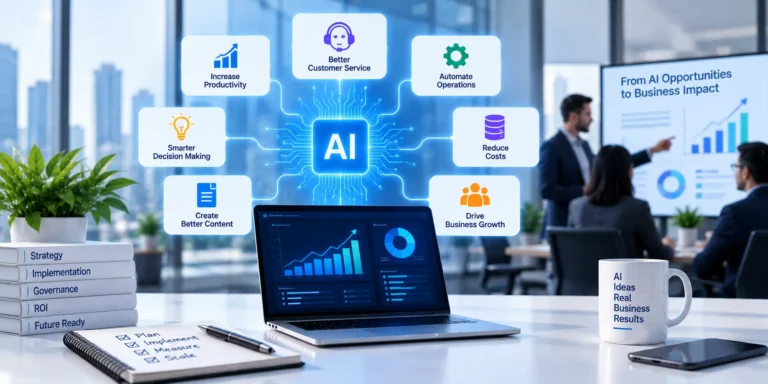
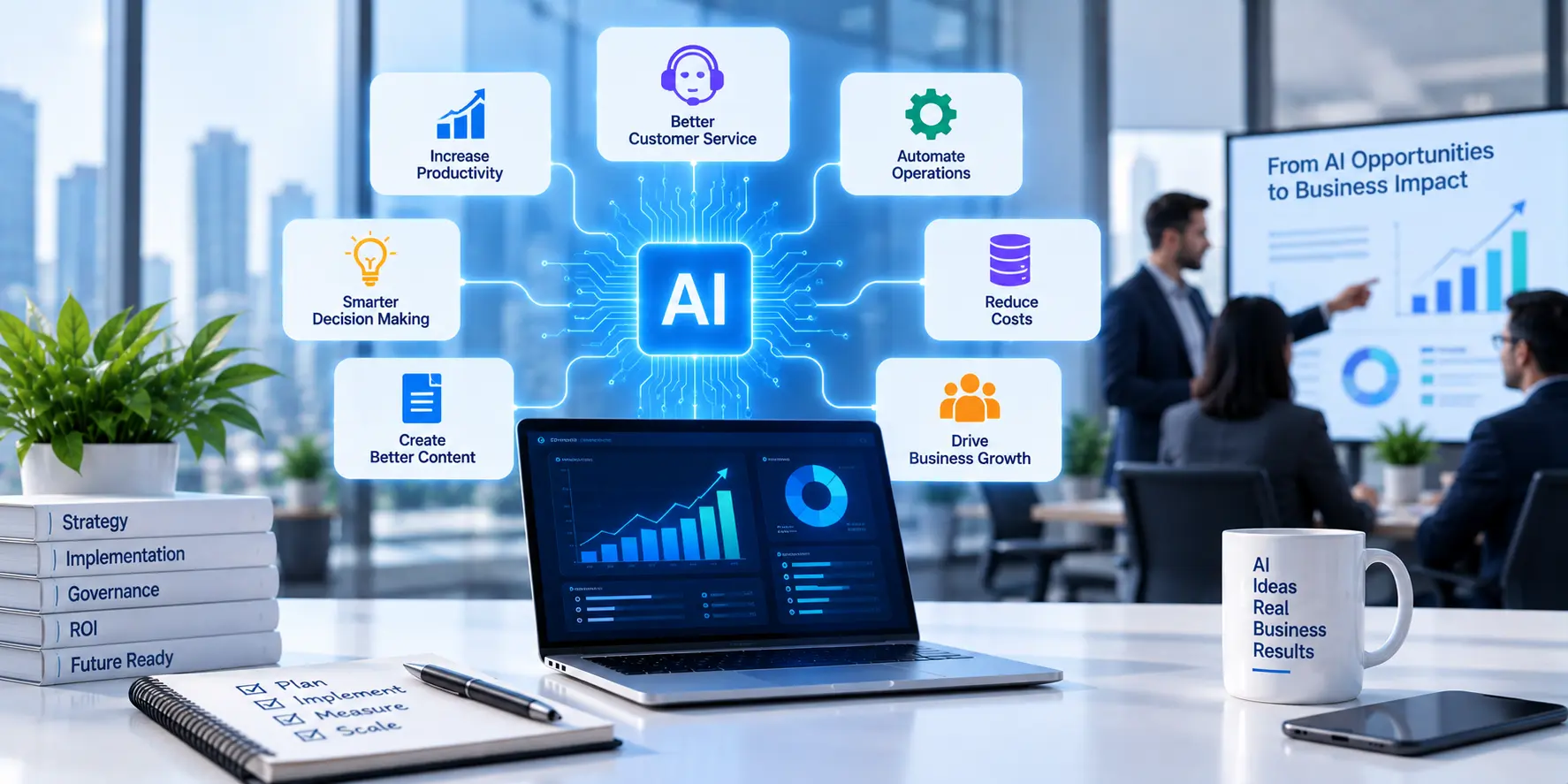
The benefits of enterprise AI come down to doing more, faster, and more consistently, at a scale people alone cannot match. The gains organizations report most often are:
- Productivity at scale. Repetitive work is automated across thousands of users, freeing skilled people for higher-value tasks.
- Better, faster decisions. Predictive analytics turn company data into forecasts and insights in real time.
- Improved customer and employee experience. Faster answers, 24/7 availability, and personalized service.
- Lower operating cost. AI absorbs volume that would otherwise require overtime or new hires.
- Consistency and compliance. Rules are applied the same way every time, with an auditable trail.
- Competitive advantage. Organizations that scale AI well move faster than those still running pilots.
Build vs Buy vs Partner
One question every enterprise faces, and one that the ranking guides mostly skip, is how to source enterprise AI: build it in-house, buy a ready-made platform, or partner with a specialist. The right answer depends on your problem, your team, and your timeline.
- Build when the capability is core to your competitive advantage and you have the data science and engineering talent to create and maintain it. Building offers the most control and the highest cost and risk.
- Buy when a proven platform already solves your problem well. Buying is faster and lower risk, at the cost of some flexibility and the need to manage vendor lock-in.
- Partner when you want the speed of buying with a solution shaped to your business, and you need help with integration, governance, and adoption. A partner helps you choose the right platforms, build on them, and stand up the controls, which is often the fastest safe path for a regulated organization.
Most enterprises use a mix: they buy the platform, build the pieces unique to them, and partner for the integration and governance that turn tools into outcomes. Starting from the problem keeps that decision grounded.
How Much Does Enterprise AI Cost?
Cost is the question every executive asks and few guides answer. Enterprise AI pricing usually blends three things: platform or license fees, consumption costs such as tokens or transactions processed, and the implementation and change-management work that turns a tool into a result. Many platforms price per user or by usage, so cost scales with adoption rather than arriving as one fixed bill. The real budget line most organizations underestimate is not the software; it is integration, governance, and driving adoption, because a solution nobody uses returns nothing.
The practical way to manage cost is to think in returns, not price tags. Start with one high-value use case, set a baseline for the time and money it consumes today, and measure the solution against it. A focused first project that automates a costly manual process often pays for itself and funds the next step. That disciplined, use-case-by-use-case approach keeps enterprise AI an investment rather than an open-ended expense.
A Governance-First Approach to Enterprise AI
The single biggest difference between enterprise AI that scales and enterprise AI that stalls is governance. At enterprise scale, AI touches sensitive data, makes or influences decisions, and is subject to regulation, so security and responsible-AI controls cannot be an afterthought. A governance-first approach means deciding, before you deploy, what data each solution can access, how it is secured, who is accountable, and how outputs are monitored for accuracy, bias, and drift. Frameworks such as the NIST AI Risk Management Framework give organizations a structured way to do this. For regulated industries this is not optional; it is the reason to choose enterprise-grade AI in the first place. Getting enterprise AI governance right early is also what lets you scale later without hitting a wall, and keeping it right over time is the job of ongoing AI service management.
How to Implement Enterprise AI
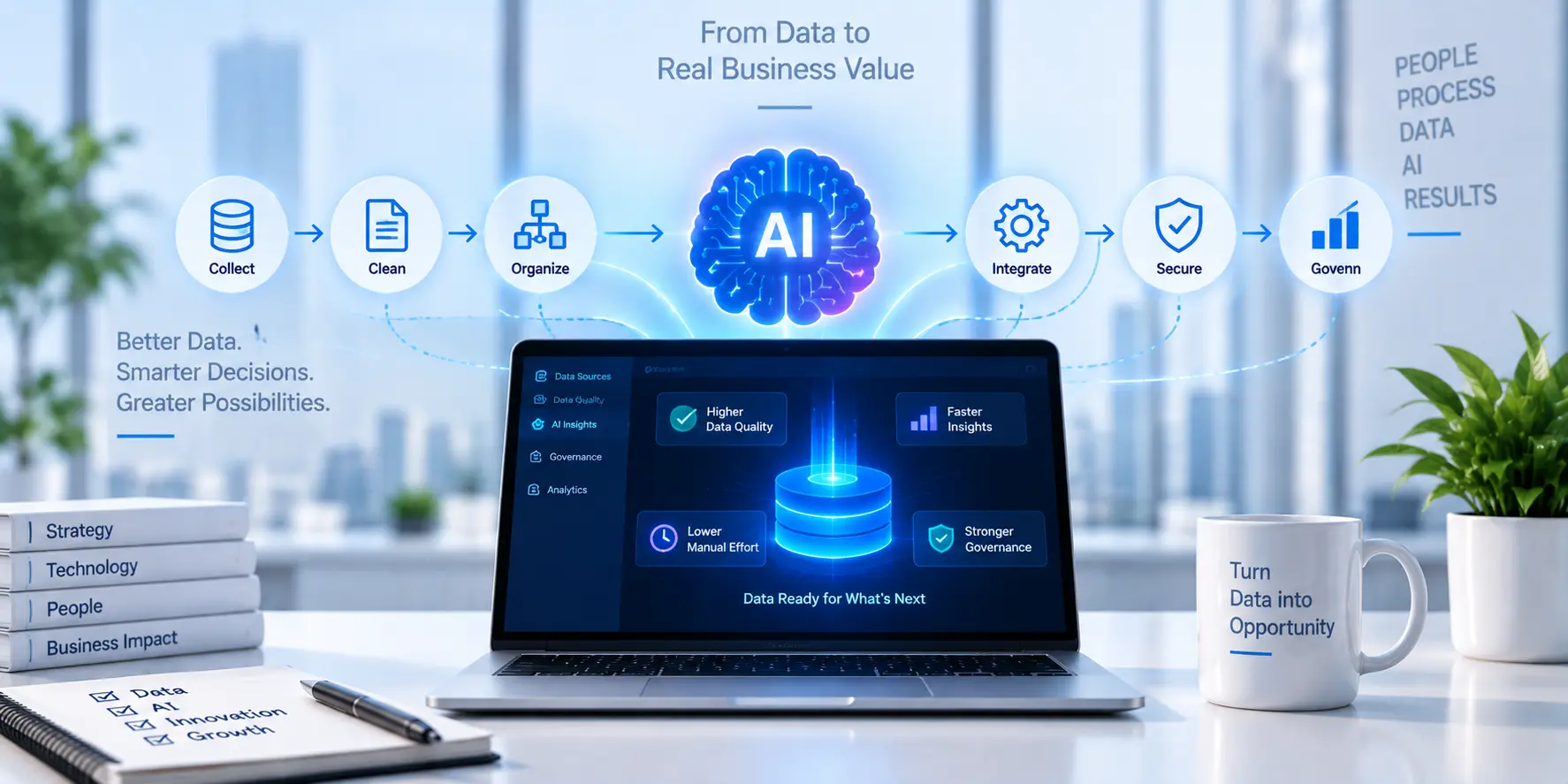
A successful enterprise AI implementation is a series of governed steps, not one big launch, and a clear enterprise AI strategy holds those steps together. The path we recommend: start from a clear business goal, pick one high-value use case, assess and prepare your data, choose the right platform, run a governed pilot with a human in the loop, put security and responsible-AI controls in place, drive adoption through change management, then measure the return and scale what works. That measured approach is what turns enterprise AI adoption into results rather than a stalled initiative, and our step-by-step guide to AI implementation walks through it in depth. Adoption is where value is won or lost, which is why deliberate AI enablement matters as much as the technology.
Challenges and How to Avoid Them
Enterprise AI is powerful, but it is not automatic, and an honest guide names the pitfalls with a fix for each. The common ones are all avoidable.
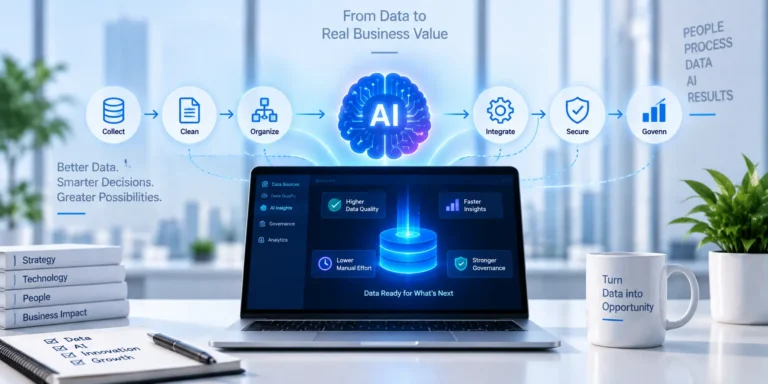
- Poor or fragmented data. AI built on messy data underperforms. Fix it by preparing data on one critical dataset before you scale.
- Weak governance. Scaling AI without clear controls multiplies risk. Fix it by deciding ownership, access, and monitoring before deployment.
- Low adoption. A solution nobody uses returns nothing. Fix it by involving users early and investing in change management.
- Trying to do too much at once. Sprawling programs stall. Fix it by proving value on one use case, then expanding.
- Vendor lock-in and tool sprawl. Too many disconnected tools create new silos. Fix it by consolidating on a governed platform rather than a point solution for every task.
How TrnDigital Helps with Enterprise AI
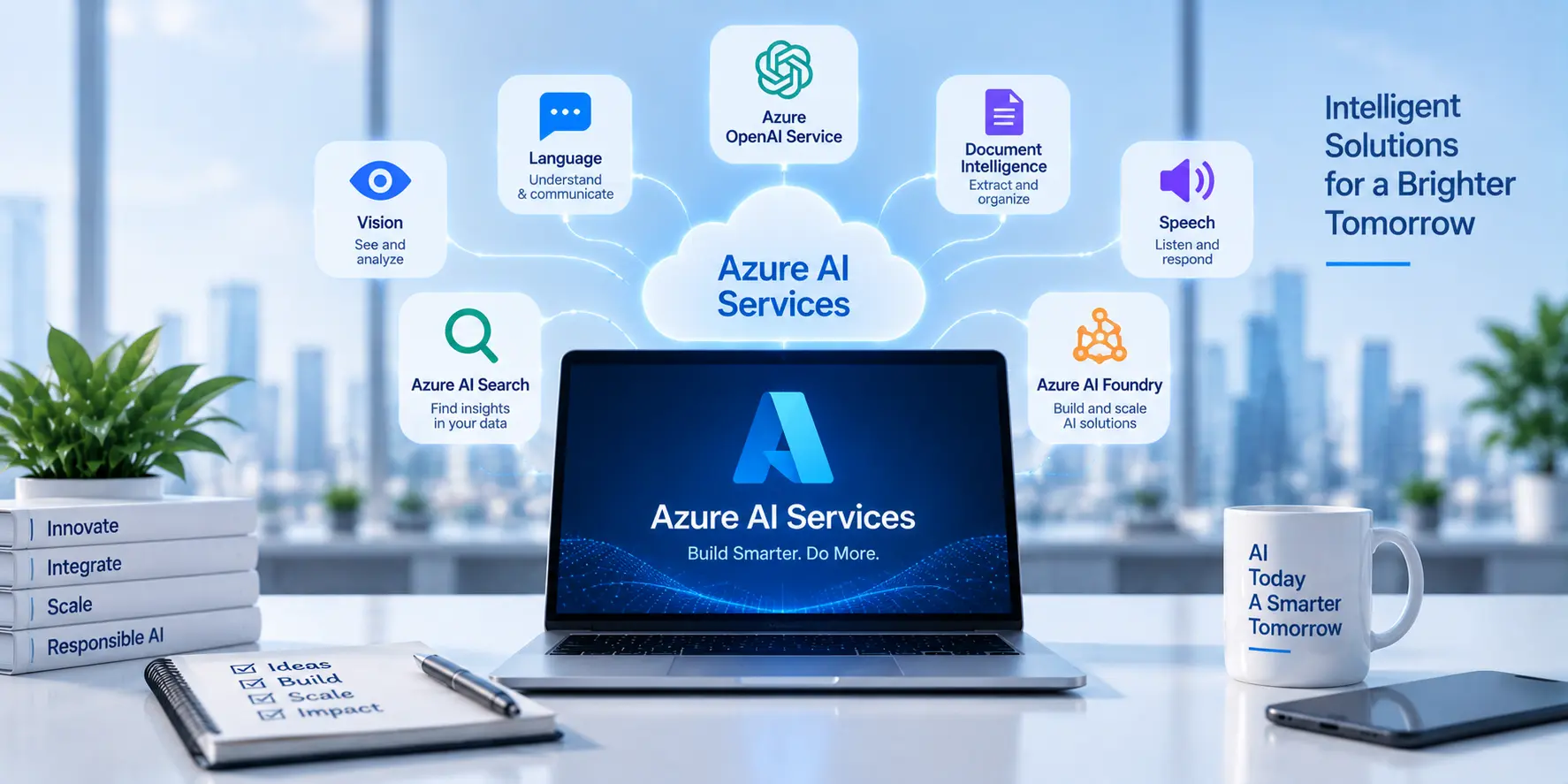
TrnDigital helps organizations put enterprise AI to work at scale, inside the Microsoft environment they already trust, with governance and security built in from day one. As a Microsoft partner, we help you choose the right solutions, build and integrate them on Microsoft AI on Azure, and stand up the responsible-AI controls that keep them compliant, from generative assistants and process automation to document intelligence and predictive analytics.
The results are real. A US based financial services enterprise used our Power Platform Center of Excellence to govern more than 180 apps centrally and develop new apps 52 percent faster, a US based manufacturing enterprise used Microsoft Copilot to make executive reporting 45 percent faster and lift productivity 20 percent, saving about eight hours per person each week, and a US based healthcare organization reached 100 percent policy-aligned AI usage while making clinical documentation 35 percent faster. Those are the kinds of outcomes governed, enterprise-scale AI makes possible.
Ready to move from AI pilots to enterprise scale? Explore our enterprise AI solutions, or book a free consultation and we will help you pick one high-value use case and a practical, governed plan to deliver it, with no obligation to proceed.
Frequently Asked Questions
1. What is enterprise AI?
Enterprise AI is artificial intelligence applied across a large organization at the scale, security, and governance it requires. It integrates with core systems, keeps data inside a governed environment, enforces access and compliance rules, and is managed and monitored over time, so AI can be used across the business safely. The tools that deliver it are often called enterprise AI solutions.
2. How is enterprise AI different from consumer AI?
The difference is scale, security, integration, and governance. Consumer tools serve one person with little control over data. Enterprise AI serves thousands of users, keeps data governed, connects to the systems the business runs on, and enforces the compliance rules the organization and its industry require.
3. What are the main types of enterprise AI?
The main types are generative AI and assistants, intelligent process automation, document and data intelligence, predictive analytics and machine learning, conversational AI, and the platforms and infrastructure that build, deploy, and govern them. Most organizations combine several of these.
4. How much does enterprise AI cost?
Cost blends platform or license fees, consumption charges such as tokens or transactions, and the implementation and change-management work that turns a tool into a result. Much of it scales with usage rather than a fixed bill. The most reliable way to manage cost is to prove ROI on one use case before scaling.
5. Should we build, buy, or partner for enterprise AI?
Build when the capability is core to your advantage and you have the talent to maintain it, buy when a proven platform already solves your problem, and partner when you want speed plus a solution shaped to your business with help on integration and governance. Many enterprises use a mix of all three.
6. Why is governance important for enterprise AI?
Because at enterprise scale AI touches sensitive data, influences decisions, and is subject to regulation. A governance-first approach, deciding access, security, accountability, and monitoring before deployment, is what keeps AI compliant and trustworthy and what lets it scale without hitting a wall later.
7. How do we get started with enterprise AI?
Start from a clear business goal, pick one high-value use case, prepare your data, choose the right platform, run a governed pilot with a human in the loop, add security and responsible-AI controls, drive adoption, then measure the return and scale what works. Starting small and measuring beats a large up-front program.
Conclusion
Enterprise AI is how organizations turn AI from scattered experiments into a governed capability that works across the business. Whether you need generative assistants, process automation, document intelligence, or predictive analytics, the winning approach is the same: start from a real problem, choose the right type of solution, decide whether to build, buy, or partner, put governance in place first, prove the return on one use case, and scale from there. Do that, and enterprise AI stops being a set of pilots and becomes a durable advantage. If you want a partner to help you get there safely and at scale, TrnDigital can help you turn enterprise AI from a plan into measurable outcomes.