AI for business is no longer a question of if, but of where to point it first. The companies getting real value are not the ones running the most tools; they are the ones that put AI on one or two high-volume, painful processes, proved the return, and expanded from there. This piece skips the theory and answers the questions a business owner actually asks: does it pay off, what does it cost, where does it go wrong, and where should you start.
If you have read ten articles that all define AI in business and list its benefits, this is the opposite. It is opinionated, it uses real numbers, and it is built to help you make a decision.
Is AI Actually Paying Off for Businesses?
Short answer: yes, for the businesses that use it deliberately. McKinsey research on the state of AI shows the large majority of organizations now use AI in at least one function, and PwC research finds productivity growth is markedly higher at the companies most exposed to AI than at those least exposed. The benefits of AI for business are real, but they are not automatic. They show up when AI is aimed at the right problem and actually adopted.
Here is what that looks like in practice, not in theory. A US based manufacturing enterprise used Microsoft Copilot to make executive reporting 45 percent faster and lift productivity 20 percent, saving about eight hours per person each week. A US based real estate and property management company cut manual data entry by 80 percent and speed processing by 65 percent with AI-powered automation. Same technology, very different use cases, both a clear return. That is the pattern worth copying: one specific process, one measurable result.
Where AI Delivers the Fastest ROI
Not every use of AI in business pays back equally. These are the AI use cases for business we see return the fastest, roughly in the order most companies should consider them, with the kind of result to expect.
| Use case | What AI does | Typical result |
| Document and data automation | Reads invoices, forms, and contracts and turns them into clean data | Hours of manual entry removed, fewer errors |
| Customer support assistants | Answers common questions 24/7 and drafts replies | Faster responses, fewer missed customers |
| Everyday productivity | A generative assistant that writes, summarizes, and analyzes | Hours saved per person each week |
| Finance and operations automation | Automates approvals, reporting, and repetitive workflows | Faster cycles, less overtime |
| Predictive analytics | Forecasts demand, risk, and churn from your own data | Better, earlier decisions |
If you are unsure where to begin, start at the top of that list. Document automation is usually the highest-return first project because almost every business drowns in invoices and forms, and the before-and-after is easy to measure.
The Building Blocks: Types of AI for Business
Behind those use cases are a handful of building blocks, the types of AI for business you will actually combine. It helps to know the names, because the tools and platforms that deliver them are what vendors call AI solutions for business, or AI business solutions.
- Generative AI and assistants. Generative AI for business, through tools like Microsoft Copilot, handles writing, summarizing, and analysis for every team.
- Document and data intelligence. The engine behind document automation, delivered as AI data extraction services and intelligent document processing.
- Intelligent automation and analytics. Workflow automation and predictive models that run on your data.
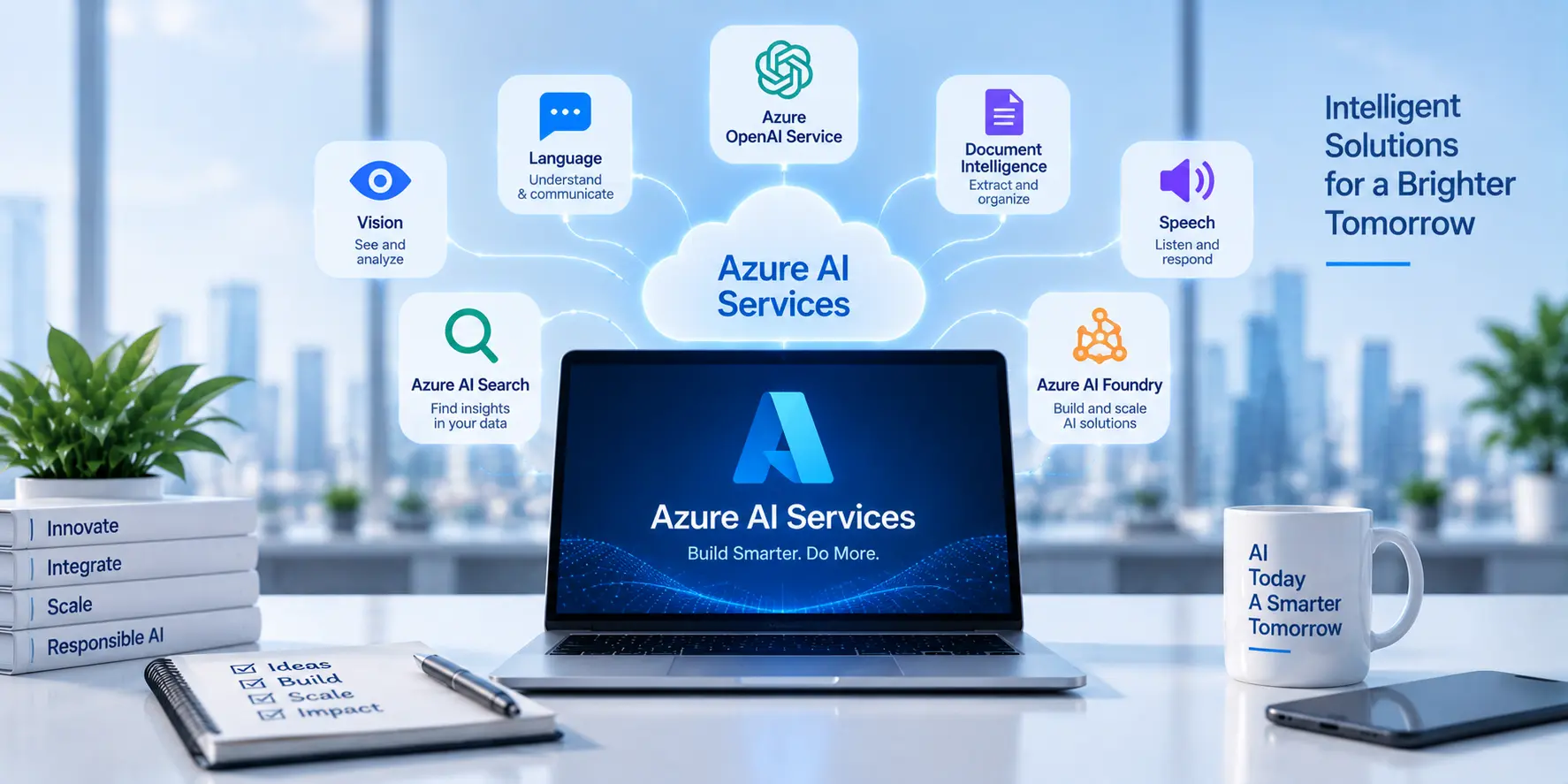
- The platform underneath. The governed environment that runs and secures it all, such as Microsoft AI on Azure.
What AI for Business Really Costs
The biggest myth is that AI for business needs a big budget. It does not need to. Many capabilities are already inside software you pay for, so a first project is often about switching on and configuring what you own. Standalone business AI tools mostly run on per-user or usage-based pricing, so cost scales with adoption rather than landing as one large fixed bill, and most have a free tier to test with. The best AI tools for business for a first project are frequently the ones already in your stack.
The real cost that catches people out is not the software; it is integration, governance, and driving adoption, because a tool nobody uses returns nothing. So judge cost by return, not price tag. Set a baseline for what a process consumes today in time and money, run one focused project, and measure against it. A good first project pays for itself and funds the next.
The Mistakes That Waste AI Budgets
Most failed AI spending traces back to the same handful of mistakes. Avoid these and you avoid the majority of wasted money.
- Buying tools before picking a problem. Ten subscriptions is not a strategy. Start from one painful process, then choose the tool.
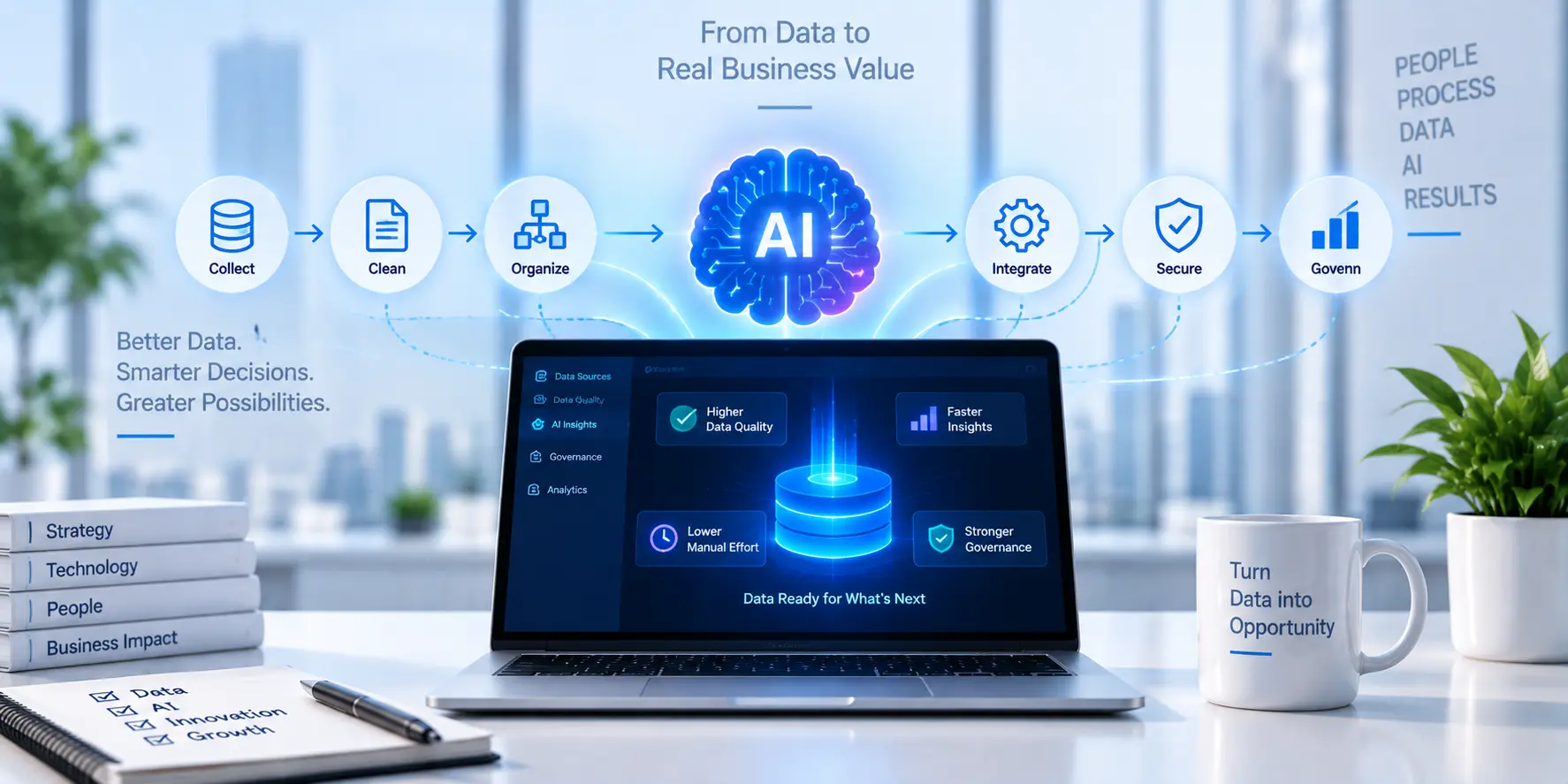
- Feeding AI messy data. AI built on bad data underperforms. Clean one critical dataset before you scale.
- Skipping adoption. A tool nobody uses returns nothing. Involve your team early and train in the flow of work.
- Boiling the ocean. Sprawling programs stall. Prove value on one use case, then expand.
- Trusting AI blindly. It can be confidently wrong. Keep a human check on anything that matters.
How to Pick Your First AI Project
You do not need a strategy deck. AI for business owners comes down to a simple test: find the task that is high-volume, repetitive, and painful, and where you can measure the before and the after. Score your candidates on three questions. Does it happen a lot? Does it waste real time or cause real errors? Can you measure the result in a month? The task that scores highest on all three is your first project.
From there the path is short: confirm which AI tools for business are already in the software you own, run a small pilot on real work with a human in the loop, add basic governance, then measure and expand. That is the same disciplined approach in our step-by-step guide to AI implementation, and because adoption is where value is won or lost, deliberate AI enablement matters as much as the tool you choose. This is how to use AI in business without the usual false starts.
Doing It Safely: Governance in Plain Terms
One reason to choose enterprise-grade AI over a pile of consumer apps is that governance comes built in. Before you deploy, decide what data each tool can see, how it is secured, who is accountable, and how you will check outputs for accuracy. For businesses in regulated fields such as healthcare, life sciences, and financial services, this is not red tape, it is the reason to do it properly the first time so you can scale later without hitting a wall. Getting governance right early is quietly what separates AI that lasts from AI that gets switched off.
How TrnDigital Helps
TrnDigital helps businesses put AI to work inside the Microsoft tools they already use, with governance and security built in from day one. We help you pick the highest-return first project, build and integrate it, and drive the adoption that makes it stick. The proof is in the results: a manufacturing enterprise made executive reporting 45 percent faster and lifted productivity 20 percent with Copilot, a real estate company cut manual data entry by 80 percent with automation, and a financial services enterprise governed more than 180 apps centrally and shipped new apps 52 percent faster through a Power Platform Center of Excellence.
Not sure where AI could help your business first? Explore our AI solutions for business, or book a free consultation and we will help you pick one high-value use case and a practical, governed plan to deliver it, with no obligation to proceed.
Frequently Asked Questions
What is AI for business?
AI for business is the use of artificial intelligence to handle everyday business work like processing documents, answering customers, writing and analyzing, and forecasting from data. Modern AI is affordable and often built into software you already use, so a business can benefit without a big budget or technical team.
Which AI use case gives the fastest return?
For most businesses it is document and data automation, because almost every company has high-volume manual keying that AI can remove, and the time saved is easy to measure. Customer support assistants and a general productivity assistant are close behind.
How much does AI for business cost?
It can start small. Many capabilities are included in software you already pay for, and standalone business AI tools usually run on per-user or usage-based pricing, so cost scales with use. Judge it by return: prove ROI on one use case before scaling.
What are the main types of AI solutions for business?
Generative AI and assistants, document and data intelligence, intelligent automation, predictive analytics, and the platform that runs and governs them. Most businesses combine a few of these to solve one specific problem.
Is AI safe for business data?
It can be, and governance is often the reason to adopt enterprise-grade AI. Decide what data each tool can access, keep it inside systems you already trust and govern, and monitor outputs, which matters most in regulated industries.
How do I get started with AI in my business?
Pick the task that is high-volume, repetitive, painful, and measurable in a month. Use the AI already in your tools where you can, run a short pilot with a human in the loop, add governance, then measure and expand.
The Bottom Line
AI for business pays off when you treat it as a series of proven, governed wins rather than a shopping spree. Pick one high-volume, painful process, use the AI you may already own, keep a human check on what matters, measure the result, and expand from there. Do that and AI stops being hype and becomes one of the most cost-effective ways to grow. If you want a partner to help you pick the right first win, TrnDigital can help you get there.