
Key Highlights from the Microsoft 365 Community Conference 2026
The Microsoft 365 Community Conference (April 21–23, Orlando) did not revolve around a single headline announcement. Instead, it revealed something more important: a clear shift in how AI is being woven into the fabric of everyday work.
What stood out this year was not ambition, but maturity. The conversation has moved beyond what AI could do and is now focused on how it is already being used inside organizations.
AI Is Becoming More Context-Aware
At the center of this shift is Microsoft 365 Copilot, which continues to evolve into something more practical and relevant. Rather than responding in isolation to prompts, Copilot is increasingly grounded in the day-to-day context of work—drawing from meetings, emails, and documents to produce outputs that feel more aligned with how teams operate.
This change may seem subtle, but it is significant. The value of AI is no longer just in generating content quickly. It is in generating content that reflects the reality of your organization—its conversations, decisions, and priorities.
The Emergence of AI Agents
Another theme that surfaced repeatedly was the gradual emergence of AI agents within workflows. These are not yet fully autonomous systems, but they represent an early step toward reducing manual effort in routine tasks.
In several demonstrations, AI was shown assisting with activities such as capturing meeting notes, identifying follow-up actions, and helping move tasks forward based on conversations. While still evolving, the direction is clear: AI is beginning to participate more actively in the flow of work, rather than just supporting it.
This signals a shift—from AI as a tool that responds, to AI as something that can help progress work alongside users.

Collaboration Is Becoming More Intelligent
Collaboration tools are also evolving in step with this shift. Microsoft Teams, in particular, is becoming more than just a place for communication. It is increasingly designed to help users stay aligned without needing to manually track every detail.
Improvements in meeting summaries, contextual insights, and overall usability are aimed at reducing the friction that often comes with collaboration. Instead of spending time catching up on what happened, users are better equipped to understand outcomes and move forward quickly.
Data Structure Is Now a Business Concern
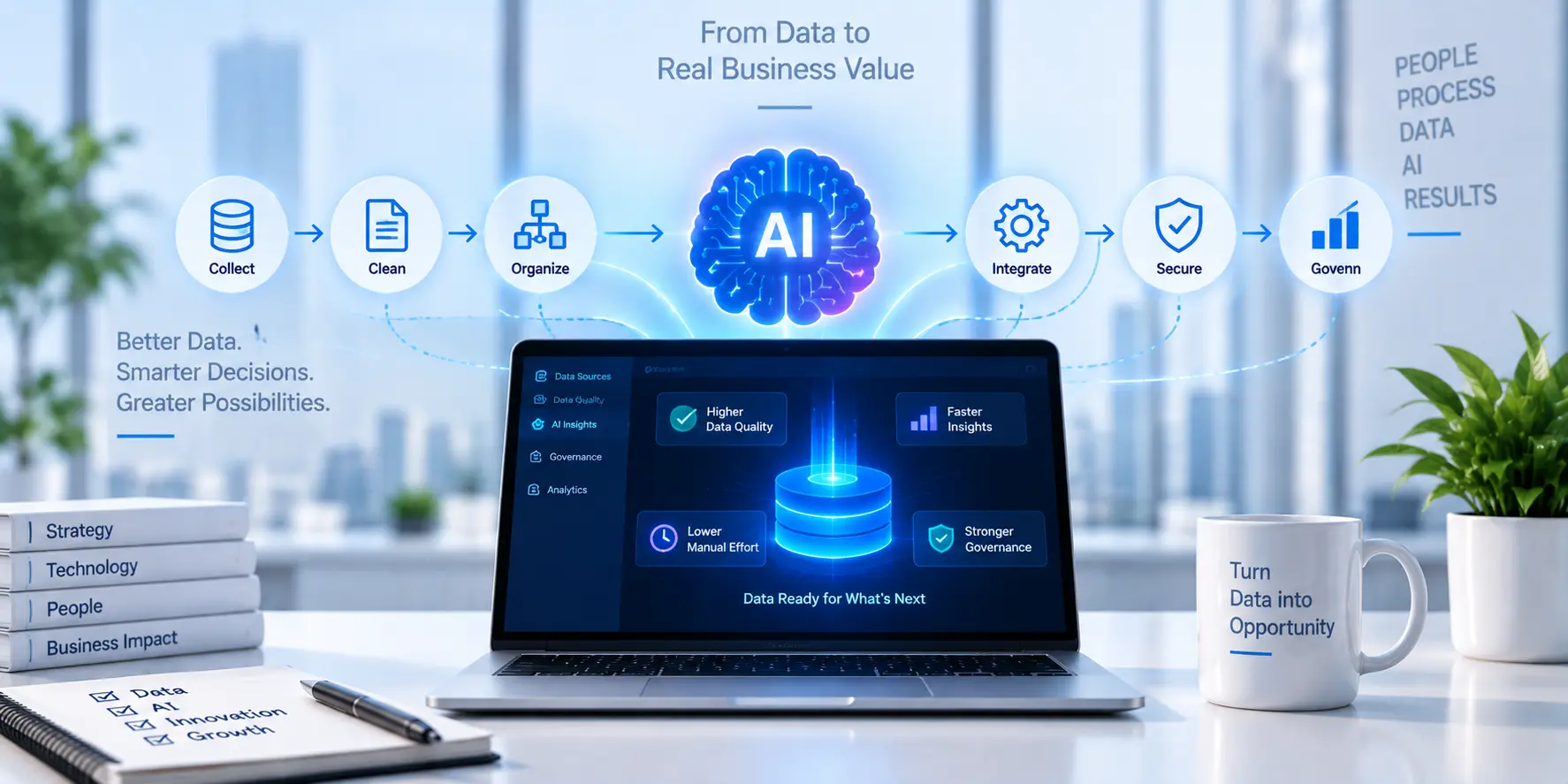
One of the most consistent messages across sessions was the importance of data structure. AI’s effectiveness is directly tied to the quality and organization of the content it relies on.
This is where platforms like SharePoint take on renewed importance. Well-organized content, clear permissions, and clean data are no longer just operational considerations—they are essential to ensuring that AI produces useful and accurate results.
Organizations that have invested in structuring their information will see better outcomes. Those that have not may find that AI surfaces inconsistencies just as quickly as it generates insights.
Simplicity Is Becoming a Priority
Alongside these advancements, there is a noticeable push toward simplicity. Many of the updates showcased at the conference focused on making systems easier to interact with—reducing the need for complex configurations and enabling more intuitive ways of working with data and content.
This is an important shift. As AI becomes more embedded, ease of use becomes just as critical as capability. The goal is not just to make systems more powerful, but to make them more accessible.
A Gradual but Meaningful Shift
Taken together, these updates point to a broader transition. Work is moving away from disconnected tools and manual coordination toward more connected, context-aware experiences.
This is not a sudden transformation. It is a gradual evolution—one where AI becomes part of the background, quietly improving how work gets done.
Final Perspective
The Microsoft 365 Community Conference 2026 was less about bold claims and more about practical progress. AI is no longer being positioned as something separate or experimental. It is being integrated into the tools people already use, in ways that are increasingly useful and relevant.
The real opportunity now lies in preparation. Organizations that focus on structuring their data, clarifying their workflows, and identifying where AI can add value will be in a far stronger position to benefit from these changes.
Because ultimately, the impact of AI will not be defined by the technology itself, but by how well it fits into the way work is already being done.