The Disconnect Between Investment in AI and Measurable Productivity
Most organizations have invested heavily in Microsoft Copilot, Azure OpenAI, or comparable platforms, and yet few report any measurable impact on productivity. AI dominates every news cycle; digging into actual enterprise workflows, however, reveals a different story. Some teams save significant amounts of time, others nothing whatsoever, regardless of industry sector. Banking, healthcare, manufacturing, retail, the same disconnect persists. How can the technology claim to automate mundane tasks when there isn’t even an observed benefit?
Definition of the Problem: Defining the AI Productivity Gap
The productivity gap refers to the gap between the potential capabilities of AI and the actual outcomes realized by adopting organizations. While most firms now possess the tools, measuring productivity change is much trickier. Statistics corroborate this observation. According to Microsoft’s 2024 Work Trend Index, 75% of knowledge workers utilize AI at work; nevertheless, 59% of surveyed executives cite challenges measuring AI-enabled productivity, while 60% are concerned about lacking a proper strategy to leverage AI throughout their firm. Gartner echoes this sentiment, predicting that 30% of all generative AI projects would fail after proof-of-concept by the end of 2025 owing to poor data quality, insufficient risk controls, growing expenses, or lack of tangible value.
The point is simple: adoption is widespread, measurable improvement is rare. Everyone buys the tools; few track and analyze the impact on task-level efficiency.
This problem matters especially when scaling AI across a mature, well-equipped enterprise. The investment levels are greater and therefore any shortcomings become glaringly obvious.
What Are the Benefits of AI Adoption Done Well?
Doing AI well has a demonstrable effect. Evidence comes exclusively from deliberate, careful AI implementations:
– Higher productivity and quality. Among Microsoft Copilot’s early users, 70% reported improved productivity and 68% saw better quality output in their work;
– Faster task completion. That same cohort of users finished typical tasks 29% faster, saving roughly 14 minutes daily (about an hour weekly);
– Return on investment. In a study conducted by IDC at Microsoft’s request, adopting AI offered average returns of $3.50 per dollar spent and returned that investment in around 14 months;
– Persistent behavior change. Finally, 77% of Copilot users claimed unwillingness to stop working with the technology upon first use.
The effect varies according to organization and implementation details, but the trend remains consistent: deliberate execution pays off, haphazard rollout does not. The numbers speak for themselves.
How Do We Close the Gap?
Our team has helped several enterprises implement Copilot and Azure OpenAI solutions. In practice, the difference maker appears to lie in just four components:
1) Select High-Impact Use Cases With Low Risk of Failure First
Deploying Copilot across all applications immediately isn’t mandatory or desirable. For measuring productivity gain accurately, focus on low-hanging fruit:
– Document processing
– Customer service chatbots
– Invoice processing
These functions are highly repetitive, involve massive volumes of transactional data, and generate observable time savings and mistakes, precisely what makes it easier to prove value before scaling up.
2) Train Your Power Users to Own and Accelerate Rollout
Accelerating deployment requires empowering power users who own and evangelize the technology. Research by Microsoft on its initial Copilot pilots confirmed that users gained maximum value if knowledgeable and supported, not just licensed. Educate your early adopters on how to configure Copilot Studio or OpenAI, how to write good prompts, and customize Copilot for optimal performance. Have them lead rollout.
3) Develop Governance Rules Ahead of Deployment
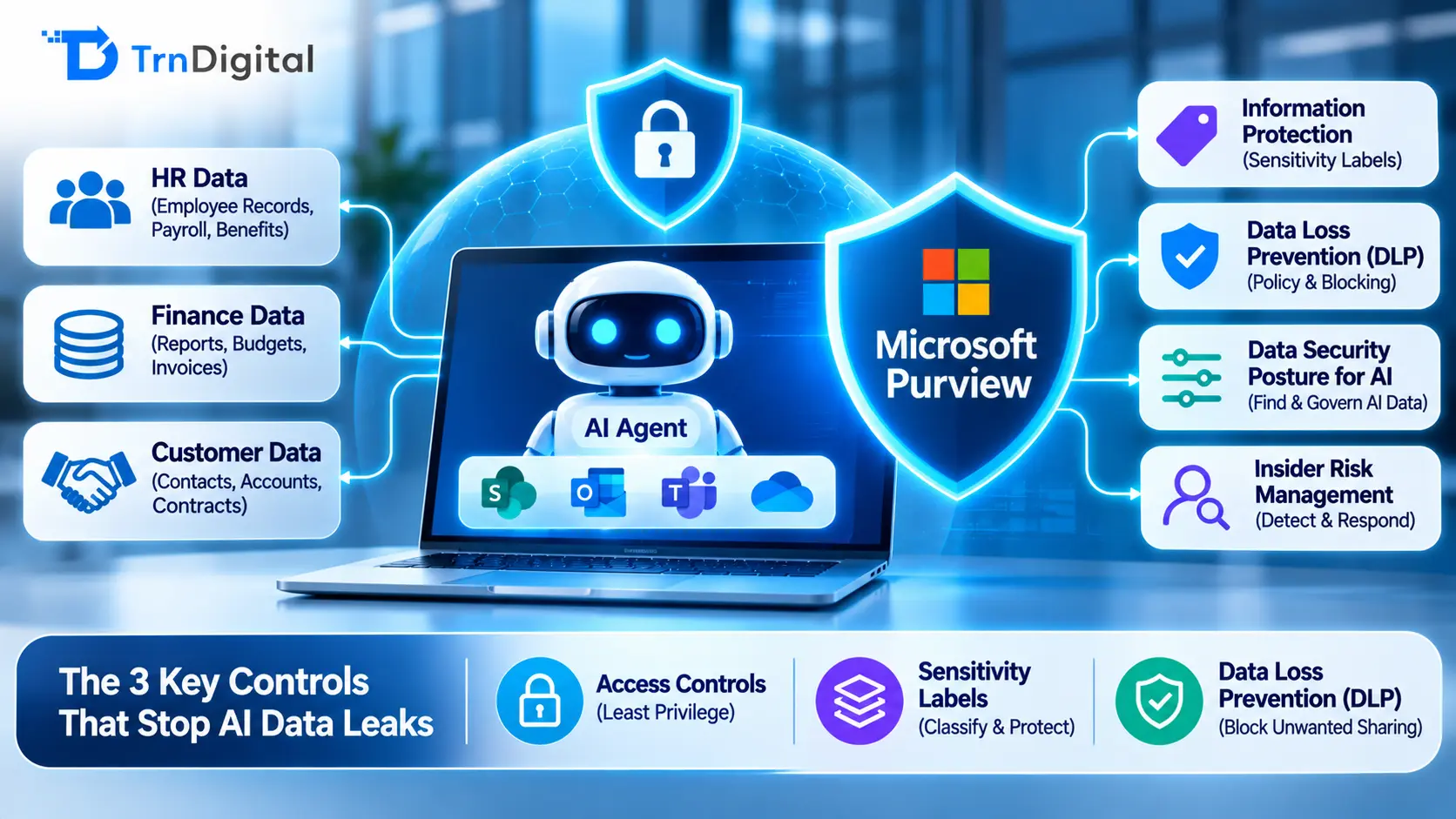
Any kind of AI project involves fresh compliance questions. Set data access guidelines, privacy controls, and usage approvals upfront before launching; these decisions qualify as core governance rather than administration. Weak risk controls rank among factors cited by Gartner as contributing to the premature death of many generative AI initiatives. Proper AI governance keeps good projects from dying because of bad execution.
How Does Measurement Work in Practice?
Measuring outcomes is crucial to confirm actual time savings achieved by adopting the solution. Copilot Analytics provides better visibility of Copilot utilization and ROI than previous iterations did. A typical framework might look something like this:
– Deploy Copilot selectively to several departments;
– Evaluate performance differences task-by-task;
– Train staff in departments that underperform.
Ultimately, the idea is that without identifying improvement, it’s impossible to unlock true value, or distinguish success from failure. Companies that skip this step entirely and roll out across departments without governance and measurement typically report zero improvements. It makes sense.
Prompt Engineering Education for End Users
Since AI relies so heavily on prompt quality, educating employees on crafting excellent prompts has a disproportionately strong effect on the final quality delivered by the system. No surprise that 68% of early Copilot users noticed quality improvements. Rapid ways to achieve that goal involve prompt engineering training.
Examples of Successful Deployments: Microsoft Copilot and Azure OpenAI
Here’s what a proper deployment looks like. These examples illustrate typical implementations based on actual experiences rather than individual clients.
Finance Department Example: Copilot for Document Processing
Imagine a medium-sized firm that requires finance analysts to manually sift through contracts and reports. Applying the automation via Copilot studio and AI data extraction, starting with a pilot among compliance analysts dealing with heavy documentation, typically saves analysts time in review. Simple.
Healthcare Sector Example: Azure OpenAI for Patient Intake
Consider a health services provider seeking to expedite patient intake procedures. Leveraging Azure OpenAI assistant with predefined data privacy rules set ahead of time enables smoother intakes without exposing your organization to regulatory risk.
Retail Industry Example: Copilot for Order Processing
Think of a retailer struggling to manage order entries, having warehouse managers process all requests manually. Deploy Copilot to speed up order processing and cut down manual data entry altogether.
Manufacturing Industry Example: Invoice Processing Using AI
Imagine an industrial manufacturer deluged with incoming invoices requiring manual entry. Copilot embedded directly into Microsoft office 365 azure managed service facilitates automated invoice processing and reduces errors dramatically.
What Happens When This Approach Fails
Failing means exactly the opposite approach: rolling out without governance, without measuring progress, and failing to properly educate your users on prompt writing. The consequence is subpar AI output and unhappy customers, specifically customer support chatbots responding poorly due to weak prompts. Remedies include training prompt writers, refining use cases, and tracking results.
What Should IT Managers Do to Implement AI Successfully?
In preparing to deploy Microsoft Copilot or Azure OpenAI in-house, here’s what yields success consistently:
– Determine the right use cases for automation. These include document processing, customer service, order processing etc.;
– Perform an AI readiness assessment (which we’re happy to perform for you);
– Formulate a pilot user group and train prompt engineers and power users;
– Establish clear AI governance and data policies;
– Deploy and analyze Copilot/Cloud AI utilization through Copilot Analytics.
We have the expertise to guide Copilot and Cloud AI implementation in enterprises. Contact us for help deploying these powerful tools effectively.
Conclusion: Focus on Measurable Improvement, Not Buzzwords
The tools save time and improve quality if used wisely. The productivity gap exists and has plenty of proof behind it. Fixing the problem means less talk and more action, in this precise order:
– Select suitable cases for automation;
– Empower early adopters;
– Build governance in advance;
– Measure improvements in task-level productivity.
We have extensive real-world AI project delivery experience. Should you require consultation or training for your AI implementation journey, don’t hesitate to reach out to our experts.
FAQ
How long until AI brings productivity gains?
Productivity gains should appear in three to six months since a pilot stage. Larger AI investments tend to pay off in an average of 14 months, according to IDC studies.
What are the major pitfalls in adoption?
Governance failure leads to failure in adoption. Poor risk controls are considered key barriers to adoption of generative AI projects by Gartner; inadequate controls may also expose firms to risks in future.
Will all departments experience identical productivity gains?
Absolutely not. Gains depend heavily on the use case, workforce, and user ability to compose prompts. Hence, measuring impact is critical to understanding productivity changes.
How can we assess the effects of Copilot accurately?
Evaluate improvement at the task level using Copilot Analytics and usage statistics collected from Copilot Studio/OpenAI.
Is it possible to organize prompt engineer training programs?
Absolutely. We provide customized prompt engineer education and AI adoption consultancy for end users.