
Boston, Massachusetts City Guide: Explore the Top Iconic Destinations
Discovering Boston, Massachusetts
Boston has built an identity unlike any other city in the Northeast. A hub of higher education, history, culture, and innovation, Boston draws residents and visitors from across the country and around the world. This guide covers ten standout destinations in and around Boston, Massachusetts, from the open green of Boston Common at the city’s center to the serene Chestnut Hill Reservoir on the Newton and Brookline border.
Each one reflects a different side of what makes Greater Boston one of the most interesting and storied places to explore in the United States.
Table of Contents

1. Boston Common in Boston, Massachusetts
Boston Common is the oldest public park in the United States, a 50-acre green space at the center of downtown Boston that has served as a gathering point for the city since 1634. From the Frog Pond in winter to the Tadpole Playground in summer, the Common connects Boston’s historic Beacon Hill and Downtown Crossing neighborhoods to the Public Garden next door and the broader Freedom Trail that winds through the city.
Best Time to Visit
- Spring brings the Boston Common to peak form, with the Frog Pond area reopened and the surrounding Public Garden in full bloom.
- Summer weekends fill the park with Boston residents, tourists, and free outdoor events that run through the warmer months.
- Fall offers crisp walking conditions and foliage color that makes the Boston Common and Public Garden corridor one of the most photogenic stretches in the city.
- Winter afternoons draw ice skaters to the Frog Pond in a Boston tradition that has continued for generations.
Highlights
- Frog Pond: A year-round attraction in the center of Boston Common, wading in summer and ice skate in winter, that draws families from across the Greater Boston area.
- Freedom Trail Access: Boston Common serves as the starting point for the 2.5-mile Freedom Trail that connects 16 historic Boston sites across the city.
- Soldiers and Sailors Monument: A prominent Civil War memorial that anchors the high ground of Boston Common and offers views across the park and downtown skyline.

2. Harvard University in Cambridge, Massachusetts
Harvard University is the oldest institution of higher education in the United States, founded in 1636 in Cambridge, Massachusetts, just across the Charles River from Boston. Its historic campus in Harvard Square draws students, researchers, and visitors from every country, and the surrounding neighborhood has built an identity as one of the most intellectually and culturally rich environments anywhere in the world.
Best Time to Visit
- Spring commencement season brings the full energy of the Harvard University campus to life, with ceremonies, events, and the Cambridge streets full of the Boston academic community.
- Fall semester weekends offer the most active campus atmosphere, with open lectures, athletic events, and the Cambridge and Boston communities mixing throughout Harvard Square.
- Summer is the most accessible season for self-guided exploration, with lighter crowds and clear sightlines through Harvard Yard.
- Winter evenings around the Harvard Square holiday season draw visitors from across Greater Boston to the Cambridge neighborhood’s shops, restaurants, and street activity.
Highlights
- Harvard Yard: The historic center of the university, surrounded by some of Cambridge’s oldest and most recognizable academic buildings.
- Harvard Art Museums: Three collections under one roof, covering art from ancient to contemporary across cultures and centuries, located steps from the Boston-area campus.
- Harvard Square: A neighborhood unto itself, with bookstores, cafes, performance spaces, and a street culture that has shaped Cambridge’s identity for generations.

3. Fenway Park in Boston, Massachusetts
Fenway Park is the oldest Major League Baseball stadium in use in the United States, home of the Boston Red Sox since 1912, and one of the most beloved sports venues anywhere in the country. The Green Monster, the manually operated scoreboard, and the intimate dimensions of the Boston ballpark give Fenway an atmosphere that modern stadiums consistently fail to replicate.
Best Time to Visit
- Spring Opening Day and early-season home games mark the return of Boston baseball and bring some of the most emotional crowds of the year to Fenway Park.
- Summer evenings at the Boston ballpark offer ideal baseball conditions, with long daylight hours and the full Fenway Park experience under the lights.
- Fall playoff runs at Fenway Park are among the most electric sports environments in Boston and the entire Northeast.
- Off-season tours run year-round and allow Boston visitors to walk the field, the Green Monster, and the historic areas of Fenway Park without a game-day crowd.
Highlights
- The Green Monster: The iconic 37-foot left field wall that defines the Boston ballpark’s character and makes Fenway Park unlike any other stadium in Major League Baseball.
- Lansdowne Street: The block behind the Green Monster that fills with Boston fans and street energy on game days and has become part of the broader Fenway neighborhood experience.
- Stadium Tours: Daily guided tours of Fenway Park that take Boston visitors through the press box, the warning track, and behind the scenes of a historic venue still in active use.

4. MIT Campus in Cambridge, Massachusetts
The Massachusetts Institute of Technology campus sits in Kendall Square in Cambridge, along the Charles River across from Boston, and anchors one of the most concentrated technology and biotech innovation districts in the world. For Boston visitors interested in the intersection of science, technology, and design, the MIT campus offers an afternoon of genuine discovery that goes well beyond a standard university tour.
Best Time to Visit
- Spring brings the MIT campus grounds and the adjacent Cambridge riverfront to their most visually appealing state, with the Charles River Esplanade active with Boston and Cambridge residents.
- Fall semester weekends see the full energy of the Kendall Square and Cambridge innovation corridor, with startup activity, campus events, and the Greater Boston academic community present.
- Summer is the most visitor-friendly season, with lighter crowds and open access to the MIT campus grounds, museums, and public art installations.
- Winter days on the MIT campus offer clear views of the distinctive architecture without the crowds, and the Cambridge neighborhood retains its active café and restaurant scene year-round.
Highlights
- MIT Museum: A public museum on the MIT campus covering robotics, artificial intelligence, holography, and the history of innovation at one of Boston’s most influential institutions.
- Stata Center: The Frank Gehry-designed building that has become one of the most photographed pieces of contemporary architecture in the Greater Boston area.
- Kendall Square Innovation District: The blocks surrounding the MIT campus in Cambridge have grown into the most productive biotech and technology cluster in the United States.

5. Museum of Fine Arts in Boston, Massachusetts
The Museum of Fine Arts is one of the largest and most encyclopedic art museums in the United States, holding a collection of more than 500,000 works across ancient Egyptian artifacts, Impressionist paintings, American decorative arts, and contemporary installations. Located in the Fenway neighborhood of Boston, the MFA draws more than one million visitors annually and serves as a cornerstone of Boston’s cultural identity.
Best Time to Visit
- Fall and winter are peak museum-going seasons in Boston, with shorter days and cooler temperatures driving strong attendance at the MFA’s galleries.
- Spring brings a mix of Boston residents and tourists to the Museum of Fine Arts, with special exhibitions often timed to coincide with the warmer season.
- Summer weekday mornings offer the most relaxed experience at the Boston museum, with lighter crowds before afternoon school and tour groups arrive.
- Late-night programming on select evenings allows Boston adults to experience the MFA with a livelier social atmosphere than standard museum hours.
Highlights
- Art of the Americas Wing: A sweeping collection of American art from pre-Columbian periods through the twentieth century, housed in a dedicated wing of the Boston Museum.
- Impressionist Collection: One of the strongest Impressionist holdings in the United States, with works by Monet, Renoir, and their contemporaries displayed in the MFA’s European galleries.
- Linde Family Wing for Contemporary Art: A dynamic exhibition space that keeps the Museum of Fine Arts connected to the present moment in Boston and global art.

6. Arnold Arboretum in Jamaica Plain, Massachusetts
The Arnold Arboretum is a 281-acre living collection of trees and woody plants operated by Harvard University in Jamaica Plain, Boston, freely open to the public throughout the year. The annual Lilac Sunday celebration each May brings some of the largest one-day crowds of any Boston outdoor event, but the Arboretum rewards quiet visits on every other day of the year as well.
Best Time to Visit
- Lilac Sunday in May draws the largest single-day crowds the Arnold Arboretum sees all year, with Boston visitors coming specifically for the bloom of the lilac collection.
- Spring overall offers the most visually diverse display as the flowering trees and shrubs across the Boston Arboretum collection progress through bloom in sequence.
- Fall brings exceptional foliage color across the 281 acres of the Jamaica Plain collection, making it one of the best leaf-peeping destinations in the Greater Boston area.
- Winter visits reveal the structural beauty of the tree collection without foliage and offer a quiet Boston natural space that most visitors discover by accident.
Highlights
- Lilac Collection: One of the most extensive lilac collections in the world, and the centerpiece of the Arboretum’s most-attended Boston event each spring.
- Peters Hill: The highest point in the Arnold Arboretum, offering panoramic views of the Boston skyline, the Blue Hills, and the surrounding Jamaica Plain neighborhoods.
- Olmsted-Designed Landscape: The Arboretum was designed by Frederick Law Olmsted as part of Boston’s Emerald Necklace park system, giving it a landscape design pedigree matched by few public spaces in the city.

7. Isabella Stewart Gardner Museum in Boston, Massachusetts
The Isabella Stewart Gardner Museum is unlike any other museum in Boston, built as a personal residence by its founder and filled with more than 2,500 works of art arranged exactly as Gardner intended, with the stipulation in her will that nothing be moved after her death. The museum is also known for the 1990 art theft that remains the largest unsolved property crime in history, a story that adds another layer to an already extraordinary Boston institution.
Best Time to Visit
- Spring fills the courtyard of the Isabella Stewart Gardner Museum with flowers that transform the central space into one of the most striking seasonal displays in Boston.
- Winter draws Boston visitors seeking warmth and beauty, and the courtyard in particular creates a striking contrast with the cold Massachusetts streets outside.
- Weekday mornings offer the most intimate experience of the Gardner Museum’s galleries, with smaller crowds and more space to engage with the Boston collection.
- The museum’s extended evening hours on select nights provide a quieter, more atmospheric experience for Boston adults familiar with the daytime crowds.
Highlights
- The Courtyard: A Venetian-style interior garden at the center of the Gardner Museum that anchors the entire Boston institution and changes with the seasons.
- Titian Room and Dutch Room: Two of the most celebrated galleries in the Boston Museum, featuring Old Master works arranged by Gardner’s original vision.
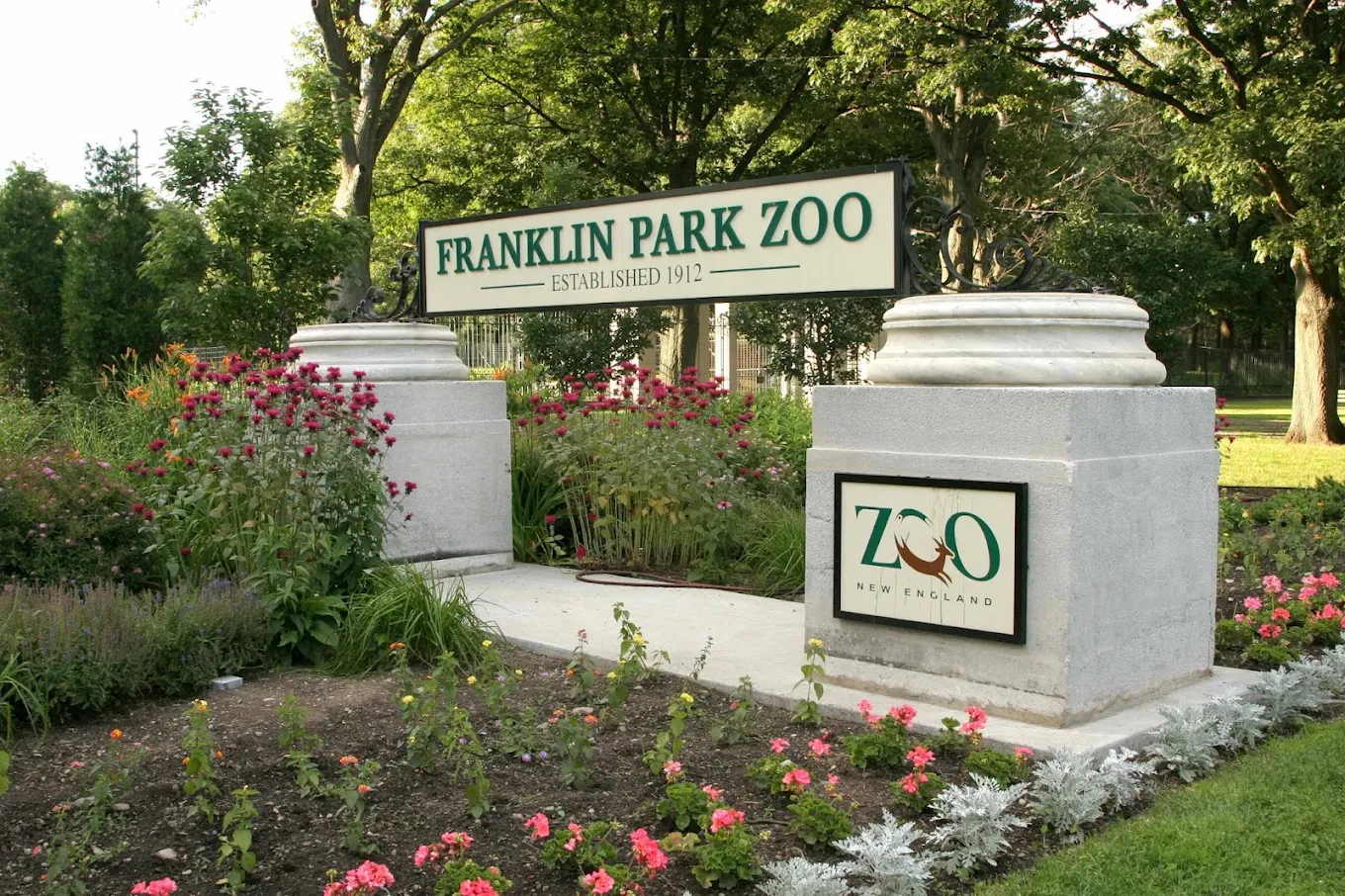
8. Franklin Park Zoo in Boston, Massachusetts
Franklin Park Zoo is Boston’s primary zoological institution, located in Franklin Park in the Dorchester neighborhood and home to more than 220 species across 72 acres. For Boston families and visitors, Franklin Park Zoo offers a full-day experience within the city limits that connects the natural world to one of Boston’s largest and most historically significant parks.
Best Time to Visit
- Spring and summer bring the highest activity levels to Franklin Park Zoo, with the Boston outdoor exhibits fully operational and seasonal animal programming at its peak.
- Fall offers comfortable temperatures and the vivid foliage of the surrounding Franklin Park landscape, making it one of the more scenic times to visit the Boston zoo.
- Summer mornings are the best time to see the most active animal behavior before the Boston heat builds through the afternoon.
- Winter sees reduced hours at some exhibits but quieter crowds for Boston visitors who enjoy the zoo at a slower pace.
Highlights
- Serengeti Crossing: A large-scale African savanna exhibit that brings giraffe, ostrich, and other species into an open Boston zoo environment designed to reflect their natural habitat.
- Tropical Forest: An indoor rainforest habitat at the Franklin Park Zoo housing western lowland gorillas, pygmy hippos, and free-flying tropical birds.
- Franklin Park Setting: The zoo sits within Frederick Law Olmsted’s Franklin Park, giving Boston visitors access to both the zoo and one of the largest green spaces in the city.

9. Wellesley College in Wellesley, Massachusetts
Wellesley College is one of the most prestigious liberal arts colleges in the United States, located in the town of Wellesley, approximately 14 miles west of downtown Boston. The campus is built around Lake Waban, with Gothic and Collegiate Gothic architecture set across 500 acres of meticulously maintained grounds that serve as a registered arboretum. For Greater Boston visitors,
Best Time to Visit
- Spring transforms the Wellesley College campus and Lake Waban shoreline into one of the most scenic academic environments in Greater Boston.
- Fall brings exceptional foliage across the 500-acre campus grounds, and the lake and woodland trails reward a longer visit from Boston-area visitors.
- Summer is the quietest season on the Wellesley campus, ideal for a self-guided walk with full access to the grounds and minimal academic-year crowds.
- The Davis Museum at Wellesley College maintains year-round public hours, offering a cultural anchor for visitors who make the trip from Boston or the surrounding Greater Boston suburbs.
Highlights
- Lake Waban: A natural glacial lake at the center of the Wellesley campus that defines the landscape of the grounds and provides a walking path of genuine beauty within the Greater Boston area.
- Davis Museum: Wellesley College’s art museum holds a collection of more than 9,000 works and is one of the strongest university art museums in the Boston metropolitan area.
- Campus Arboretum: The Wellesley College campus is a registered arboretum with labeled trees and plantings that reward botanically curious visitors from across Greater Boston.

10. Chestnut Hill Reservoir in Newton and Brookline, Massachusetts
The Chestnut Hill Reservoir is a historic water supply reservoir on the Newton and Brookline border, built in the 1860s and now operated as a public recreation area by the Metropolitan District Commission. The 2.2-mile perimeter path around the reservoir draws walkers, runners, and cyclists from Newton, Brookline, Brighton, and the surrounding Greater Boston neighborhoods year-round.
Best Time to Visit
- Spring brings the Chestnut Hill Reservoir perimeter path to life with foliage and the return of the Greater Boston outdoor community after winter.
- Fall offers the best foliage conditions along the reservoir path, with the water reflecting the surrounding tree color for some of the most scenic walking in the Newton and Brookline area.
- Summer mornings draw the largest running and cycling crowds from Newton, Brookline, and the surrounding Boston neighborhoods.
- Winter walking around the Chestnut Hill Reservoir provides a quiet, reflective experience with views of the historic pump station and the open water in a largely uncrowded setting.
Highlights
- Perimeter Walking Path: A 2.2-mile flat loop around the reservoir that serves as one of the most consistently used outdoor fitness paths in the Newton and Brookline area of Greater Boston.
- Victorian Gothic Pump Station: A landmark piece of 19th-century industrial architecture on the reservoir grounds that makes Chestnut Hill a destination with historical depth beyond its natural setting.
- Reservoir Views: Open water views across the Chestnut Hill Reservoir provide a visual break from the dense residential neighborhoods surrounding it, making the path feel more expansive than its urban setting suggests.
Why Boston's Landmarks Stay With You
From the open lawn of Boston Common to the quiet perimeter of the Chestnut Hill Reservoir, from the world-class collections of the Museum of Fine Arts to the unmatched atmosphere of Fenway Park, Boston rewards visitors who move slowly and look closely. A walk through Harvard Yard lingers.
As a managed IT services provider serving businesses across Greater Boston and Massachusetts, TrnDigital works alongside the organizations that keep this region moving. When you are ready to make your technology work as hard as your business does, TrnDigital is here to help.
Plan a visit. Take your time. Boston, Massachusetts, will introduce itself one landmark at a time.